Dose First, Diagnose Later: The Bold-Coffee Ratio Reset
Photo: TaurusEmerald, CC BY-SA 4.0, via Wikimedia Commons
You brew a dark roast, take a sip, and immediately start diagnosing. Too sour? Must be the grind. Too bitter? Must be the water. Too weak? Must need a longer steep. So you fiddle with the timer, nudge the grinder, and maybe blame the bag. Meanwhile, the lever you have not touched is the one sitting right there in the scoop: dose.
Dose is the first thing a home brewer can change and the last thing most of us actually understand. It does two jobs at once. It sets strength, which is how much coffee is in the cup. It also shifts extraction, which is how much of the coffee actually dissolves into the water. Get the dose right and a lot of dark-roast problems stop looking like grind problems.
Strength and extraction are not the same argument
A weak cup is not automatically an under-extracted cup. Weak means low concentration: not enough coffee for the amount of water. Sour means under-extracted: the water did not pull enough sweetness and body out of the grounds. Bitter and ashy means over-extracted: the water pulled too much of the roast tail. You can have a weak cup that is also bitter, which is why adding steep time can make a thin cup taste worse.
More coffee per water makes the cup stronger. At the same grind and brew time, it also tends to lower the extraction percentage, because each gram of coffee sees less water. For a dark roast, that can be exactly the correction you want. Dark beans are more porous and more soluble than light beans. They give up flavor fast, including the bitter stuff. A heavier dose can keep the cup big and chocolatey without dragging out the ashy finish.
Why bold roast likes a heavier starting point
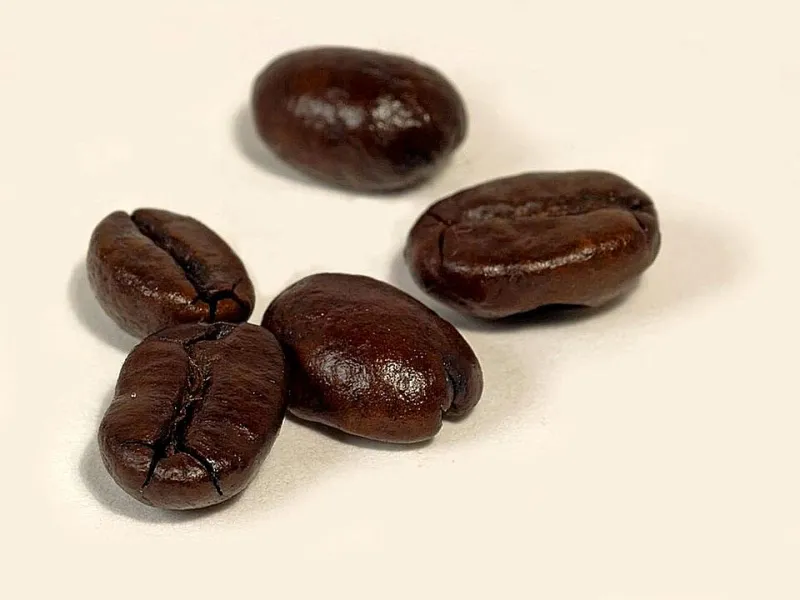
Think of dark roast as a concentrated flavor packet. At a standard 1:17 ratio, you are asking a lot of water to move through a bean that is already eager to dissolve. The result can be thin and sharp or heavy and burnt, depending on the brewer. At 1:14 or 1:13, the water has less relative contact per gram of coffee. You get more body, more sweetness, and less of that campfire tail.
That does not mean you should keep adding coffee until the cup turns to mud. Too heavy a dose can taste syrupy, chalky, or sour because the water never gets deep enough into the bed. The goal is a bigger cup with a rounder finish, not a cup that feels like a dare.
Starting ratios for the three brewers most of us own
Use a scale. A cheap digital scale that reads grams is the best money you can spend on coffee, and it makes this whole conversation possible. These are starting points for a bold dark roast, not laws.
French press
Start at 1:14. That means 30 grams of coffee to 420 grams of water. If you want a little more lift, go 1:15. If you want a heavier, more chocolatey cup for holiday hosting, go 1:13. Use a coarse grind, add all the water at once, stir once, and steep for four minutes. Press slowly. If the cup is ashy, do not steep longer. Add a little coffee and coarsen the grind slightly.
Drip
Start at 1:15: 30 grams of coffee to 450 grams of water. That is a solid bold-cup baseline for a standard batch brewer. If your machine runs hot and fast, you may prefer 1:14. If the cup tastes muddy or bitter, go coarser before you go lighter. A dark roast at 1:14 with a medium grind often tastes rounder than the same coffee at 1:17 with a fine grind, because you are not overworking the soluble stuff.
Moka pot
The moka pot does not use a pour-over ratio in the same way, because the basket sets the dose. Fill the basket level and do not tamp it. Add water to just below the safety valve. For a three-cup pot, you are usually working with about 15 grams of coffee and 150 grams of water in the base, which is roughly 1:10 before the brew concentrates. If the cup is bitter, coarsen the grind and lower the heat. If it is sour, go slightly finer. Do not pack the basket to chase strength.
The two-cup test that ends the guessing
Pick one coffee and one brewer. Brew two cups back to back. Use 1:16 for the first and 1:13 for the second. Keep the grind, water, temperature, and brew time the same. Taste them side by side.
If the 1:13 cup is rounder, sweeter, and more chocolatey, you just found your baseline. If it is muddy or sour, split the difference at 1:14 or 1:15. If both cups are ashy, the dose is not the whole problem; coarsen the grind. If both are sour, go finer. This test isolates dose instead of changing five things at once. It is also a good excuse to drink two cups of coffee and call it research.
A quick dark-roast dose cheat sheet
- Thin and sour: add 2 grams of coffee per 300 grams of water, or move from 1:16 to 1:14.
- Bitter and ashy: add a little coffee and coarsen the grind slightly. The heavier dose reduces extraction, and the coarser grind keeps the tail out of the cup.
- Weak but not sour: add coffee only. Do not lengthen the brew.
- Strong but harsh: add a little coffee, coarsen slightly, and check your water temperature. Boiling water on a dark roast can pull ash fast.
- Muddy or silty: coarsen the grind and keep the dose where it is.
More coffee is not a caffeine shortcut
A heavier dose does mean more caffeine in the cup, because caffeine scales with the amount of coffee you use. But dark roast is not automatically a caffeine bomb compared with light roast. Roast level changes flavor and solubility more than it changes caffeine. If you are sensitive, pay attention to dose and cup size, not just color.
The reset is simple, not easy
Start with more coffee, taste, then adjust the grind. That order matters. Most of us reverse it because grind size feels like the sophisticated answer. Dose is the blunt instrument, and blunt instruments are underrated when you are trying to make a bold cup taste like chocolate instead of an ashtray.
At Balder, we are not interested in brewing that tastes like a chemistry exam. We are interested in a cup that tastes like something. Dose is the first dial to turn. Turn it with purpose, taste the difference, and then decide whether the grind really needs your attention.