Six Hours to Grandma's: A Bold-Coffee Thermos Plan That Beats the Bitter Clock
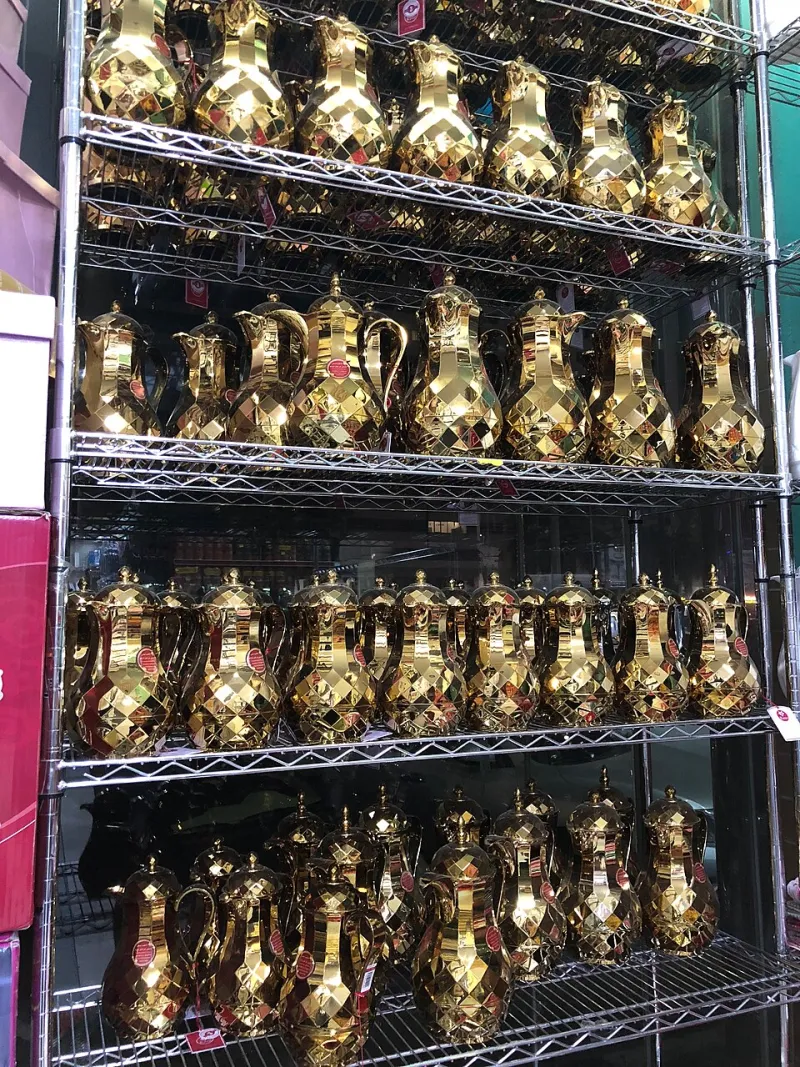
Photo: Slywire, CC BY-SA 4.0, via Wikimedia Commons
The holiday road trip has a coffee problem nobody talks about. You brew a great dark roast at six in the morning, pour it into a thermos, and by the second rest stop it tastes like a pencil shaving soaked in pavement. The beans were not bad. The brew was not bad. The vessel and the clock did the damage.
A thermos is not a pause button. It is a hot, sealed environment where extraction keeps limping along and oxygen keeps poking at the edges of the roast. Dark coffee is especially vulnerable because it already carries bittersweet cocoa and roasted notes. Push it too far and those notes tilt into ash. The fix is not a fancier thermos. It is a plan built around concentration, filtration, heat retention, and leaving the lid alone.
Here is the road-trip plan I use when the destination is six hours away and the gas-station pot is not an option.
Brew a Mild Concentrate, Not a Syrup
The instinct is to brew rocket fuel so it survives the ride. That usually backfires. A syrupy concentrate keeps extracting in the thermos and arrives bitter. Instead, brew a mild concentrate at roughly 1:13, a touch stronger than the 1:16 you might use at home but still drinkable straight.
For a one-quart thermos, start with 70 grams of coffee and 910 grams of water. Grind medium-coarse, closer to drip than espresso. Use water just off the boil, around 200 to 205 degrees Fahrenheit. If you are brewing pour-over, let the bed drain fully but do not let the slurry sit and stew. If you are using a French press, steep for four minutes, press gently, and then pass the coffee through a paper filter. That extra step matters more than you think.
Preheat the Thermos Like You Mean It
A cold thermos steals heat from the first hour of the trip. Fill the vessel with boiling water, cap it, and let it sit for five minutes. Dump the water, then fill immediately with coffee. Do not towel-dry the inside. The residual heat is your friend.
This is also the moment to check the seal. A thermos that leaks on a mountain pass is a bad thermos. A thermos that leaks into a bag of gifts is a holiday story you will retell for years. Test it at home with plain water before you trust it with dark roast.
Paper Is Your Friend
Fines are the tiny coffee particles that keep giving up flavor long after you want them to. In a sealed thermos, those fines have nowhere to go. They settle, they steep, and they turn a clean dark roast muddy. Use a paper filter even if you brewed with a metal mesh or a French press. Rinse the paper first so it does not taste like cardboard.
A clean cup also lets the roast speak. Bold coffee should taste like something: chocolate, toasted sugar, a little dark fruit. It should not taste like the inside of a hardware store.
Fill It Full and Forget It
Oxygen is the other enemy. Leave an inch of headspace, not three. The fuller the thermos, the less air there is to oxidize the coffee and flatten the aroma. Seal it, set it upright in the car, and leave it alone.
This is the hardest part. Every stop does not require a lid twist and a sniff. Opening the thermos releases heat, invites oxygen, and starts the clock over on your flavor. Pour your cup, close it, and get back on the road.
The Four-Hour Rule and the Six-Hour Reality
Dark-roast coffee is at its best in the first three to four hours. After that, it is still good, but the edges soften. At six hours, a well-prepped thermos should taste like a rounder, quieter version of the morning cup. It should not taste burnt. If it does, the problem was likely too fine a grind, too hot a hold, or too much time with the lid open.
Milk and sugar are best added in the cup, not the thermos. Dairy can scorch or separate over a long hot hold, and sweetened coffee tends to develop a flat, canned quality. Keep the thermos black and doctor each cup as you pour.
A Timeline That Actually Works
Set a 6 a.m. alarm for a 7 a.m. departure. Put the kettle on first. While it heats, grind the coffee and preheat the thermos. Brew a small cup for home, then brew the thermos batch. Fill the thermos by 6:35, seal it, and pack it upright in a bag or seat well. Drink your first road cup around 8, when the highway has thinned and the coffee has settled.
If you are traveling with a second coffee drinker, bring two cups and one thermos, not two thermoses. One well-filled vessel holds heat better than two half-filled ones.
The Passenger-Seat Kit
A small enamel cup, a couple of paper filters, and a damp cloth for drips are enough. Skip the creamer carton rolling around the floor. Skip the open mug in the cupholder. This is a sealed-vessel operation.
And if the thermos runs dry before the destination, do not panic. Plain hot water from a rest-stop tap and a single-serve pour-over packet can rescue the last hour. It will not be the morning cup, but it will beat the burnt coin-operated stuff by a mile.
Bold coffee on the road is not about surviving the trip. It is about arriving with a cup that still tastes like the beans you chose. Preheating, filtering, filling full, and keeping the lid closed are not fussy details. They are the whole doctrine.