The Freezer Vault: A Dark-Roast Coffee Storage Plan That Actually Preserves Bold Flavor
There is a stubborn idea in home coffee circles that the freezer is where beans go to die—or worse, to wake up tasting like frozen peas. For dark-roast drinkers, that reputation is backwards. A freezer done right is a vault. It buys you time with the chocolatey, syrupy, low-end weight that makes bold coffee worth drinking. But it is not a resurrection machine. Freezing preserves what is already good; it cannot rebuild a bag that has been breathing on your counter since Labor Day.
At Balder, we treat dark roast as a flavor-forward ingredient, not a compromise. That means storage should protect boldness, not just delay staleness. Here is the practical playbook.
The myth: cold kills coffee
Cold does not kill coffee. Moisture, oxygen, heat, and time do. The freezer slows oxidation and aroma loss dramatically. The catch is condensation. When a cold bean hits warm air, water vapor gathers on the surface. That is the fast track to dull, papery, vaguely refrigerated flavor. Every rule below exists to keep that from happening.
Why dark roast deserves a better storage plan
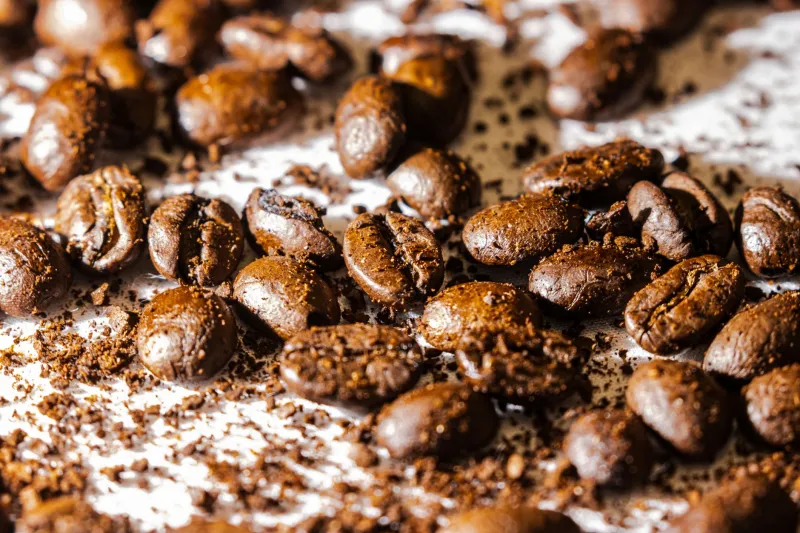
Dark roast beans have a different posture than light roast. The roasting process pushes oils to the surface, and those oils are where a lot of the deep, bittersweet, cocoa-and-molasses character lives. They are also vulnerable to oxygen. At room temperature, a dark roast can go flat surprisingly fast—sometimes within a few weeks of opening. The freezer is not overkill for a bean you love. It is a sensible way to keep a larger stash in rotation without turning every bag into a race.
Portion like you mean it
The biggest freezer mistake is freezing the whole bag and digging into it every morning. That is not storage; that is a series of tiny thaw cycles. Instead, split the bag into portions you will finish in five to seven days. If you brew two cups a day, that is roughly a week of beans. Label each portion with the roast date and the date you froze it. A roll of blue painter's tape and a marker will outperform most fancy labels.
Portioning also gives you a natural rhythm: pull one bag on Sunday, brew through it, pull the next one when you need it. No scooping from a frosty mass, no guessing.
Packaging: starve the air
Air is the enemy. Cold just makes the enemy patient. Use a vacuum sealer if you have one—it is the simplest way to remove oxygen and lock in aroma. If you do not, use a heavy-duty freezer bag, press out as much air as you can, and double-bag it. A clean, dry mason jar filled nearly to the brim can also work, but glass needs a little headspace and should be thawed sealed. Skip thin sandwich bags and open clips. They are not armor.
One more note: dark roast oils can migrate. Put the sealed portions inside a larger freezer bag or a dedicated airtight bin. That keeps the beans from picking up whatever is happening next to the frozen shrimp.
Thawing is where most people blow it
Pull a portion from the freezer the night before you need it and let it thaw in the fridge, still sealed. Or leave it sealed on the counter for 30 to 60 minutes. Do not open the bag while the beans are cold. Do not microwave them. Do not pour them straight into the grinder and expect the same result. Let the sealed portion come to room temperature, then open it. If you see condensation on the inside of the bag, give it a few more minutes sealed.
Once thawed, treat that portion like fresh coffee: keep it sealed between brews, store it away from heat and light, and finish it within the week. Do not refreeze it. Repeated freeze-thaw cycles are how you get faded flavor and a bag of beans that smells like the inside of a freezer.
The real shelf life
For dark roast, we think in eight-week blocks. Freeze within a week or two of the roast date if you know you will not finish the bag quickly. For peak flavor, aim to use frozen portions within two to three months. You can go longer—six months is not dangerous—but the chocolatey depth will start to flatten. This is not a forever plan. It is a buffer.
And please: do not freeze beans that are already stale and hope for a comeback. If the bag has been open on the counter for a month and the aroma is gone, the freezer will only preserve the disappointment. Freeze fresh, or drink what you have.
Whole bean, almost always
Freeze whole beans. Grinding increases surface area and gives oxygen more places to work. If you must freeze ground coffee—say, for a travel setup—portion it into single-use airtight packets and accept that it is a convenience play, not a flavor play.
A quick freezer hygiene check
Keep the coffee away from strong-smelling foods. Dark roast is porous and its surface oils can pick up odors. Use a dedicated shelf or bin. Keep the freezer temperature steady. A chest freezer that stays cold and full is better than a door shelf that swings warm every time someone looks for ice cream. And label everything. Mystery bags are how good beans become science experiments.
The Balder routine
Buy bold. Rest it briefly. Split it into weekly portions. Seal it hard. Freeze it fast. Thaw it sealed. Grind it fresh. That is the whole party trick. The freezer is not a graveyard for coffee. It is a vault for the beans you actually want to drink—dark, sweet, and loud enough to stand up to milk, morning, and whatever the day throws at you.