Stovetop Thunder: A Dark-Roast Moka Pot Method That Doesn't Taste Like Ash
The moka pot has a reputation problem in American kitchens. It gets filed next to the fondue set and the bread machine: charming, European, and not quite serious. That is a mistake. The stovetop brewer is not espresso, and it never will be. But for dark roast, it is one of the most direct, satisfying tools on the counter. It gives you a small, syrupy cup with enough texture to carry cocoa, caramel, and toasted sugar — if you stop treating it like a temperamental antique and start treating it like a brewer with rules.
Why Dark Roast Belongs on the Stovetop
Moka pots brew with modest pressure, usually in the range of 1 to 2 bar, which is a fraction of what an espresso machine generates. That lower pressure is exactly why dark roast works. You are not trying to force every aromatic compound out of a light, dense bean. You are extracting a darker, more soluble roast that already gives up chocolate and caramel easily. The danger is overshooting. Too much heat, too fine a grind, or a basket packed like a snowball will push the cup from bittersweet to burnt.
The other advantage is ritual. A moka pot rewards attention. You hear the brew change from a slow honey-like stream to a wet gurgle. You can smell when the roast is getting pushed too hard. That feedback is useful for anyone learning to brew bold coffee by taste instead of by numbers.
The Repeatable Stovetop Method
Start with hot water. Fill the base chamber with filtered water to just below the safety valve. Never cover the valve. Hot water keeps the metal from heating the grounds for too long before extraction begins, which helps protect dark roast from scorching.
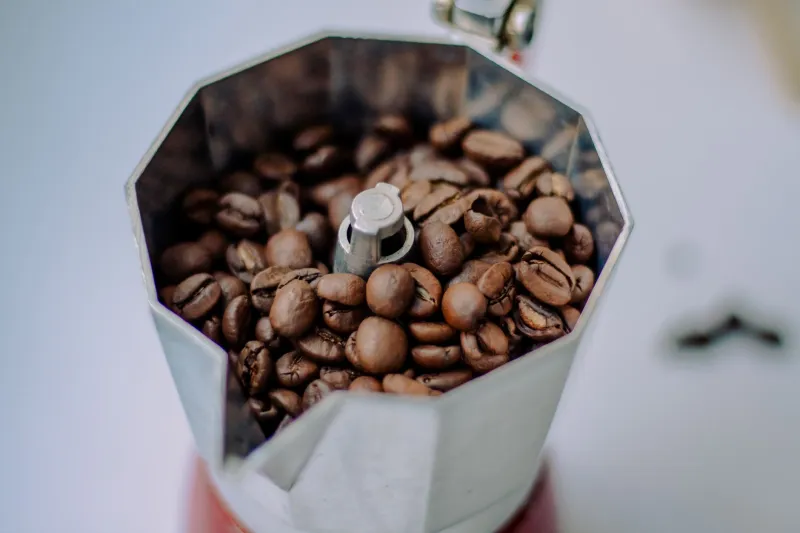
For a three-cup pot, dose 16 to 18 grams of dark roast. Grind medium-fine, closer to fine sea salt than espresso powder. You want resistance, not cement. Fill the basket level and smooth the top with your finger. Do not tamp. Do not press. The moka pot does not need your body weight.
Screw the top on firmly. If the gasket is dry or stiff, rinse it and seat it properly. A bad seal creates leaks and uneven flow.
Set the pot on medium-low heat. On a gas range, keep the flame under the base, not licking up the sides. On electric coils, give the burner time to settle before you judge the heat. Leave the lid open if you want to watch the first flow. When coffee starts to emerge, it should look like a slow, dark stream, not a sputtering geyser. If it gushes, the heat is too high or the grind is too fine.
Lower the heat as the stream builds. When the flow turns pale and starts to gurgle, pull the pot off the burner. If you want to stop extraction quickly, wrap the base in a cool, damp towel or run just the bottom under cool water. Stir the coffee in the top chamber before pouring. That small step evens out the cup.
The Bitterness Traps
Most bad moka coffee is not a bean problem. It is one of these:
- Grind set for espresso. Powder-fine coffee clogs the basket, raises pressure, and pushes bitter compounds into the cup.
- Tamping the grounds. The basket is not a portafilter. Tamping creates resistance the brewer was not designed to handle.
- High heat from the start. Dark roast plus a roaring burner equals scorched notes and steam.
- Leaving the pot on after the gurgle. The last bit of extraction is the harshest. Get off the heat.
- A dirty gasket or valve. Old oils turn rancid and make every cup taste like a hardware store.
- Stale dark roast. Oily, faded beans produce flat, ashy coffee no method can rescue.
Tweaks That Keep Chocolate in Charge
If the cup is bitter, change one thing: go one notch coarser, drop the heat, or pull the pot earlier. Do not change all three at once. If the cup is thin or sour, go slightly finer or start with hotter water. If it is both bitter and weak, your grind is probably uneven and your heat is too high.
For chocolatey notes, choose beans with tasting notes of cocoa, caramel, or toasted nuts rather than smoke and char. Rest dark roast for several days after the roast date. Freshness matters, but dark roast needs a little time to settle. Store beans airtight, away from the stove.
Finally, taste the moka pot coffee before you drown it. It is concentrated, but it is not espresso. Some people add hot water to make an Americano-style cup. Others drink it short with a splash of milk. Both are valid. The point is to taste the roast, not just the heat.
A moka pot will never be automatic. That is the appeal. With dark roast, a sensible grind, and a little restraint, it makes a bold cup that tastes like chocolate and toasted sugar instead of ash. Give it a fair shot. It has earned the counter space.