Five Cups, Zero Homework: A Dark-Roast Blind Tasting for Real Conversation
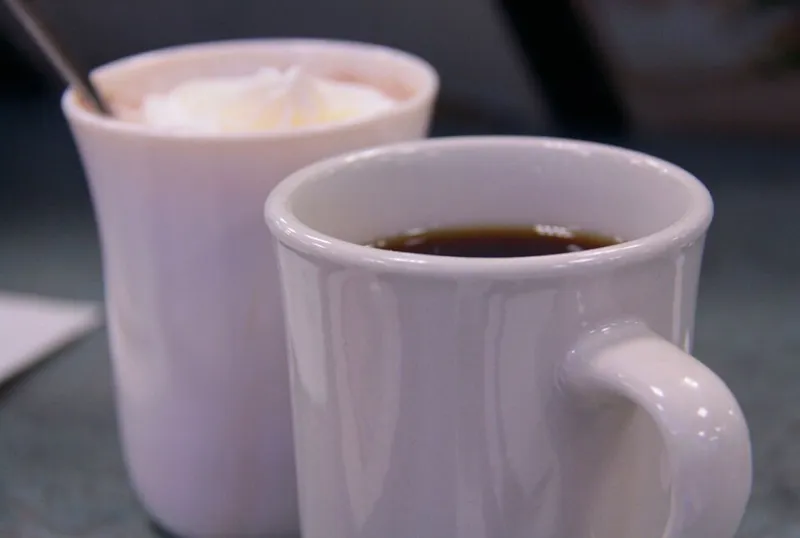
Photo: waferboard, CC BY 2.0, via Wikimedia Commons
A blind tasting has a reputation problem. Somewhere between wine class and corporate team-building, it picked up a lot of homework: swirl this, sniff that, announce a note of bergamot with a straight face. That is not how most of us actually drink coffee. At Balder, we think bold beans deserve better than a ceremony. They deserve a table full of people, five hot mugs, and a conversation that doesn't sound like a final exam.
So here's the plan: a five-cup dark-roast flight for friends, family, or the neighbors who keep asking why your kitchen smells like a chocolate shop. No flavor-wheel intimidation. No grading rubric with twenty boxes. Just a repeatable setup, small cups, and three things worth comparing — chocolate notes, body, and clean finish. It works on a random Sunday. It works even better over a holiday weekend when everyone is already standing around the kitchen anyway.
Set the table like a potluck, not a lab
You don't need lab glassware or a printed tasting mat. You need five identical cups per person, five coffees, and a way to keep the identities secret. Small ceramic cups or sturdy paper cups both work; the important thing is that everyone gets the same vessel. A 4- to 5-ounce pour is plenty for each coffee. This isn't a hydration challenge. It's a comparison.
Label the cups underneath, not on the side: A, B, C, D, and E. Keep the bags out of sight. If you want to get fancy, tear off the bag labels and set them aside for the reveal. If you want to keep it truly simple, number five small bowls and put a spoonful of each ground coffee in them for smelling — but don't stress about it. The cups are the main event.
Set out water, plain crackers or bread, and a dump cup or pitcher. A little room-temperature water between cups does more for your palate than a lecture about acidity ever will. And give people permission to spit if they want. This is a tasting, not a endurance contest.
Pick five bold roasts with some distance between them
The flight works best when the coffees are different enough to talk about. Five bags that all taste like the same chocolate bar will make for a polite but boring afternoon. Aim for a range: one nutty and round, one deeply cocoa-forward, one with a little dark fruit or molasses, one that leans toward caramel sweetness, and one that plays with smoke or spice without going full campfire.
They should all be dark roasts, or at least bold medium-dark coffees, because that's the point. You're not trying to prove that light roast is better or worse. You're comparing how different beans and roasts handle the same job: delivering a big, satisfying cup. A good lineup might include a classic Brazilian or Colombian dark roast, a Sumatran for weight, a Guatemalan for cocoa and sweetness, an espresso blend built for milk, and a decaf dark roast for the person who wants to play along after 8 p.m. Five is the sweet spot. Three feels like a warm-up. Seven turns into a caffeine field trip.
Brew every cup the same way
The whole tasting falls apart if you change the method halfway through. Pick one brewer and stick to it. A French press is the easiest crowd-pleaser for a group because you can brew in batches and keep the process visible. A drip machine works if it has a decent showerhead and you're willing to brew in small batches. Pour-over is fine for four people, less fine for twelve. Whatever you choose, use the same grind, the same water temperature, the same ratio, and the same steep or brew time for all five coffees.
Write the recipe down before guests arrive. For a French press, that might be a 1:15 ratio, a medium-coarse grind, water just off the boil, and a four-minute steep. For a drip machine, use the same scoop and the same batch size per coffee. The goal is not to find each bean's perfect brew. The goal is to give every bean the same fair shot. If one coffee tastes weak and another tastes bitter, that's information — but only if you brewed them the same way.
Brew in courses if you can. Five cups sitting on the counter for twenty minutes will not show their best side. Make two or three cups, taste, then brew the next round. Or brew all five back-to-back and ask people to taste in order. Just keep the cups small and the pace moving.
Use a scorecard that fits on a napkin
Here's the entire scorecard: three lines and a number. For each cup, rate chocolate notes from 1 to 5. Rate body from 1 to 5. Rate clean finish from 1 to 5. Then write one word or one short phrase — "brownie," "thin," "syrupy," "slightly smoky," "weird aftertaste." That's it. No columns for acidity, no aroma descriptors, no point deductions for using the word "yummy."
The three categories are deliberately plain. Chocolate notes cover the range from cocoa powder to fudge to milk chocolate. Body is about weight and texture: does the coffee feel thin, round, creamy, or heavy? Clean finish is the reset test: after you swallow, does the flavor fade nicely, or does it leave a dry, ashy, or sour edge? Those three questions get at most of what people actually care about in a bold cup. They also give the group a shared language without turning anyone into a judge on a cooking show.
Keep the talk loose, then reveal the bags
Invite people to say what they taste before they start scoring. The first answer is often the most honest. "This one smells like a candy bar." "This one is smoother." "This one tastes like the coffee at my grandma's church." All of that is useful. Resist the urge to correct anyone. If someone says "burnt," ask whether they mean bitter, smoky, or drying. If someone says "strong," ask whether they mean flavor, body, or caffeine. You're not teaching a seminar. You're helping the table get more specific.
After everyone has scored all five, reveal the bags. The reveal is the fun part, but it's also where tastings get snobby. Don't let it. The point is not to find the one true coffee. The point is to find out what your people like. Maybe the group favorite is the cheapest bag on the table. Maybe the fancy single origin finishes last. That's a great result. It means you just saved yourself some money and learned something about your friends.
Send everyone home with a job
Before the cups go in the sink, ask each person to write down the cup they'd actually buy again. Not the one they scored highest, not the one that sounded most impressive — the one they want in their kitchen on a Tuesday morning. That's the real ranking. The napkin scorecards are just there to help you pay attention.
A five-cup dark-roast flight is a small amount of setup for a genuinely good afternoon. It gives people something to do with their hands, something to argue about, and something warm to drink. It doesn't require a flavor wheel, a certificate, or a single mention of terroir. Just bold beans, the same brew method, and enough curiosity to taste what's in the cup. That's a blind date worth repeating.