Bold Should Taste Like Something: A Balder Manifesto on Dark Roast, Clarity, and Big Flavor
Walk into a US diner or scan a supermarket coffee aisle and you will see the same word doing a lot of heavy lifting: bold. It usually means dark, oily, and smoky. Sometimes it means the beans have been roasted until the origin story disappears and all that is left is a bitter handshake. At Balder Coffee, we think that is a raw deal for beans and a raw deal for your morning cup. Bold should be a flavor, not a roaster setting.
The Char Trap
Dark roast has its place. It can bring cocoa, toasted sugar, and a heavyweight body to the table. But in American coffee culture, 'bold' has become a lazy shorthand for 'roasted dark enough to hide the defects.' That is not boldness. That is camouflage.
When beans are pushed deep into second crack, the roaster's hand becomes the loudest voice in the cup. Origin notes—the citrus, the berry, the stone fruit, the floral lift—often get flattened under smoke and carbon. The result can feel strong, but strength is not the same thing as flavor. A cup can punch you in the mouth and still say nothing.
What Boldness Actually Is
At Balder, boldness means intensity with clarity. It is a coffee that shows up with a clear point of view: sweetness, acidity, body, and a finish you can follow. It has enough concentration to register, and enough definition that you can name what you are tasting.
A bold coffee does not have to be dark. It does not have to be oily. It does not have to taste like a campfire. A washed Ethiopian pour-over can be delicate and still memorable. A medium-roast Colombian can be sweet, rounded, and quietly powerful. A well-built espresso blend can be bold enough to stand up to milk without turning into ash.
The question is not 'How dark is it?' The question is 'Does it taste like something?'
Roast Level Is a Volume Knob, Not a Quality Label
Roast level changes how boldness shows up. A darker roast tends to build body, reduce acidity, and push smoky, bittersweet notes forward. A lighter roast tends to preserve origin character and acidity, which can make a coffee feel more vivid but not necessarily more intense. Medium roasts often sit in the sweet spot for drinkers who want flavor and structure without losing the bean's identity.
But roast level is not a scoreboard. A light-roasted, dense, high-grown bean can have more flavor density than a dark-roasted commodity bean. And a dark roast can still be clean and sweet if the green coffee is good and the roast is deliberate. The issue is not dark versus light. The issue is whether the roast serves the flavor or smothers it.
Extraction and Water Do Half the Work
You can buy a beautiful medium roast and still brew a cup that tastes hollow or harsh. Boldness is also a brew variable. Under-extract and you get sour, thin, or sharp flavors that read as weak. Over-extract and you get bitter, drying, or ashy notes that people often mistake for strength.
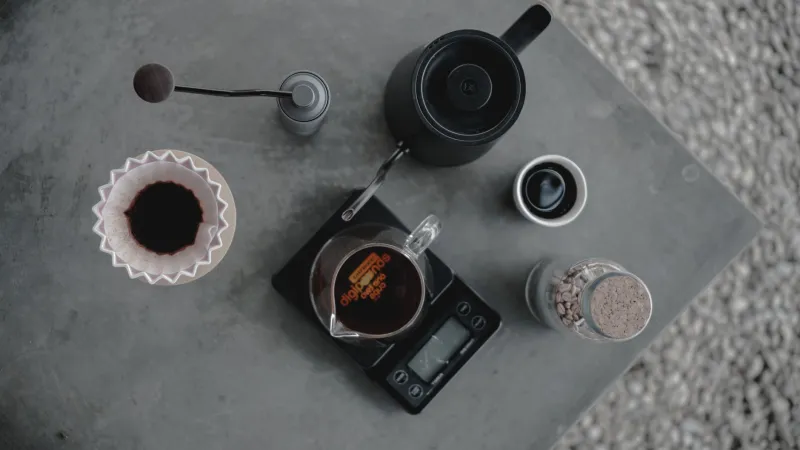
Start with a repeatable recipe: a scale, a consistent grind, and water that tastes good on its own. For a simple pour-over, try 15 grams of coffee to 250 grams of water, medium grind, and water just off the boil. If the cup is sour and thin, go finer. If it is bitter and drying, go coarser. Change one thing at a time.
Water chemistry matters more than most home baristas expect. High alkalinity can mute acidity and flatten brightness. Very low mineral content can make coffee taste thin and watery. If your tap water is heavily treated or very hard, try filtered water or a simple brewing-water recipe. You do not need a laboratory. You need water that lets the coffee speak.
The Balder Boldness Test
Here is a simple protocol for home baristas who want to separate real boldness from roast char. Pick one coffee and brew it three ways, keeping everything else as consistent as you can.
- Brew a control cup with your normal recipe. Write down sweetness, acidity, body, and finish.
- Brew a slightly stronger cup by tightening the ratio—say 1:15 instead of 1:16—without changing the grind.
- Brew a slightly weaker cup at 1:17. Taste all three side by side.
Ask yourself: Does the flavor get clearer and more intense, or does it just get louder and harsher? A truly bold coffee will hold its shape as concentration changes. You should still be able to taste sweetness and some kind of origin character. If the only thing that scales up is bitterness, you are tasting roast, not boldness.
Try the same test with milk if you drink milk drinks. A bold coffee should still show through. If a shot disappears under four ounces of milk, it was not bold. It was just dark.
Bean-Buying Cues for Flavor-First Boldness
When you shop, look past the word 'bold' on the front of the bag. Look for information that tells you what the coffee actually is.
- Roast date, not just a best-by date. Fresh coffee is not automatically good coffee, but stale coffee rarely tastes bold in a good way.
- Specific tasting notes. 'Chocolate, caramel, orange peel' tells you more than 'dark and intense.'
- Origin and process. A washed coffee from a named region gives you a starting point. Natural and honey processes can bring extra fruit and body.
- Roast level with a reason. A medium or medium-dark roast can be plenty bold. Ask yourself whether the roast is there to build structure or hide something.
- Whole bean. Grind close to brew time if you can. Pre-ground coffee gives up aroma fast.
At Balder Coffee, we are not against dark roast. We are against the idea that dark equals better. Bold beans should taste like something—something you can recognize, crave, and brew again tomorrow. Better brewing starts with better language. Let's retire the char trap and give boldness back to flavor.