Bold Is Not a Roast Level: A Supermarket Dark Roast Field Guide
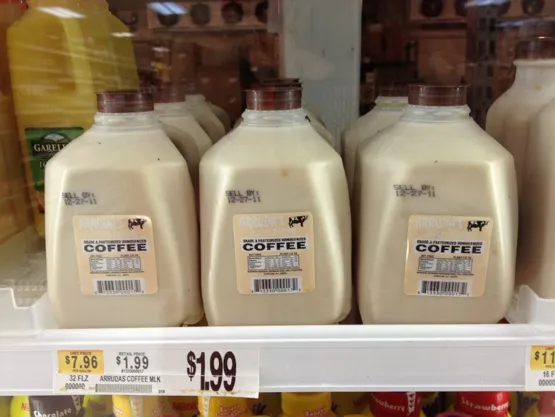
Photo: Jessamyn, CC BY-SA 3.0, via Wikimedia Commons
Walk down any supermarket coffee aisle and you’ll see the same word doing heavy lifting: bold. It’s on black bags, red cans, matte pouches, and glossy boxes with mountains on them. It’s printed in fonts that look like they belong on a pickup truck. And it tells you almost nothing.
Bold can mean dark roasted. It can mean strong brewed. It can mean the marketing team ran out of adjectives and went with the loudest one left. For home brewers who want dark roast with actual clarity and chocolatey depth, the bag is a document to read, not a billboard to believe. So here’s the audit I run before I spend money in the grocery aisle — and a small taste test that shows why the label matters.
Start With the Date, Not the Adjective
The first thing I look for is a roast date. Not a best-by date. Not a “packed on” date tucked under the fold. A real roast date.
A best-by date is a shelf-life promise, not a roast date. It tells you when the company thinks the coffee will stop being sellable, which is a different question from when it was roasted. Some supermarket bags are nitrogen-flushed and can taste decent for a while, but dark roast is not immortal. The bright, chocolatey notes fade first. What’s left is flat, woody, and vaguely ashy.
If a bag has only a best-by date, I treat it as a warning label, not a green light. If it has a roast date, I want it recent — ideally within a few weeks, though dark roast can settle nicely after a short rest. The point is not to chase a number. The point is to know whether you’re buying coffee or buying inventory.
Oil Sheen Is a Clue, Not a Personality
Dark roast beans often look oily. That’s normal. Heat pulls oils to the surface, and a little sheen can be a sign you’re actually dealing with a darker roast.
But oil is not a toughness score. A bag of beans sitting in glossy puddles with dusty residue at the bottom is not flexing. It’s often just old coffee showing its age. I want a moderate sheen, a clean bag, and beans that still smell like roasted coffee rather than the inside of a cardboard box.
This is where supermarket packaging gets tricky. You can’t always see the beans. If the bag has a valve, give it a squeeze and a sniff. Fresh dark roast should smell sweet, roasty, and a little like cocoa. If it smells like pencil shavings or old pantry, put it back.
Origin Details Are the Quiet Flex
A bag that says “100% arabica” is not telling you much. Arabica is the baseline, not the biography. I want to know where the coffee came from, how it was processed, and ideally what the roaster was trying to do with it.
Supermarket dark roasts often lean on vague language: mountain grown, premium blend, slow roasted, extra bold. Those phrases are not useless, but they’re not information. A blend can be excellent. A single origin can be boring. What matters is whether the bag gives you enough detail to understand the cup you’re buying.
If the label lists a country, region, or process, that’s a good sign. If it lists altitude and varietal, even better. If the only concrete word on the front is bold, assume you’re buying a roast level and a mood, not a traceable product.
Grind Claims and the All-Purpose Trap
“For all brewers” is one of the great compromises of the coffee aisle. A grind that works in a drip machine, a French press, and an espresso machine does not exist. It can be acceptable in several methods. It cannot be ideal in all of them.
If you’re buying preground dark roast, look for a grind that matches your actual brew method. Drip wants a medium grind. French press wants coarse. Espresso wants fine and consistent. If the bag just says all-purpose, expect muddy French press or weak drip depending on which way the grind leans.
Whole bean is the better bet when you can manage it. Dark roast is forgiving, but it still benefits from being ground close to brew time. And if a bag is preground and has no roast date, the clock is already running faster than you think.
The Taste Test: Three National Bags vs. a Specialty Control
I brewed three widely available national-brand dark roasts against a specialty control. Same recipe for all four: 1:16 coffee-to-water ratio, 200°F water, coarse grind, four-minute French press steep. I tasted them blind first, then checked the bags.
The control was a washed Guatemalan dark roast, whole bean, rested about eight days. It smelled like cocoa and cooked cherry. In the cup it had sweetness, a clean finish, and enough body to feel satisfying without turning bitter.
The first national bag — the big red can — brewed dark and heavy, but the finish was ashy and dry. It tasted like roast more than coffee. The second — a matte black bag with moderate oil — was smoother but hollow, like toasted bread with no sweetness behind it. The third — a glossy bag promising extra bold — had the most aggressive aroma and the most burnt, rubbery finish. None were undrinkable. None delivered the clarity of the control.
That’s the useful lesson. The specialty bag was not “bolder.” It was clearer. The dark roast had been roasted with enough care that the chocolatey depth didn’t come at the cost of everything else.
What Actually Delivers
A supermarket dark roast can still be a good buy. You just have to shop like a roaster instead of a slogan. Look for a roast date, not just a best-by date. Check the oil sheen and the smell. Demand at least a little origin information. Match the grind to your brewer. Treat bold as a word, not a guarantee.
And remember that dark roast is not a competition. The best bag in the aisle is not the one that sounds toughest. It’s the one that tells you the most, smells like something, and brews a cup where bold tastes like chocolate and depth instead of ash and attitude.
Bold should taste like coffee, not a command.